


 Written by admin
Mobile users face a common issue when travel, work, or personal calls require more than one mobile plan. A single SIM card often limits flexibility, and phone users search for better control over data and calls. Modern smartphones solve part of this issue through digital SIM technology. You gain more freedom without physical cards or constant SIM swaps.
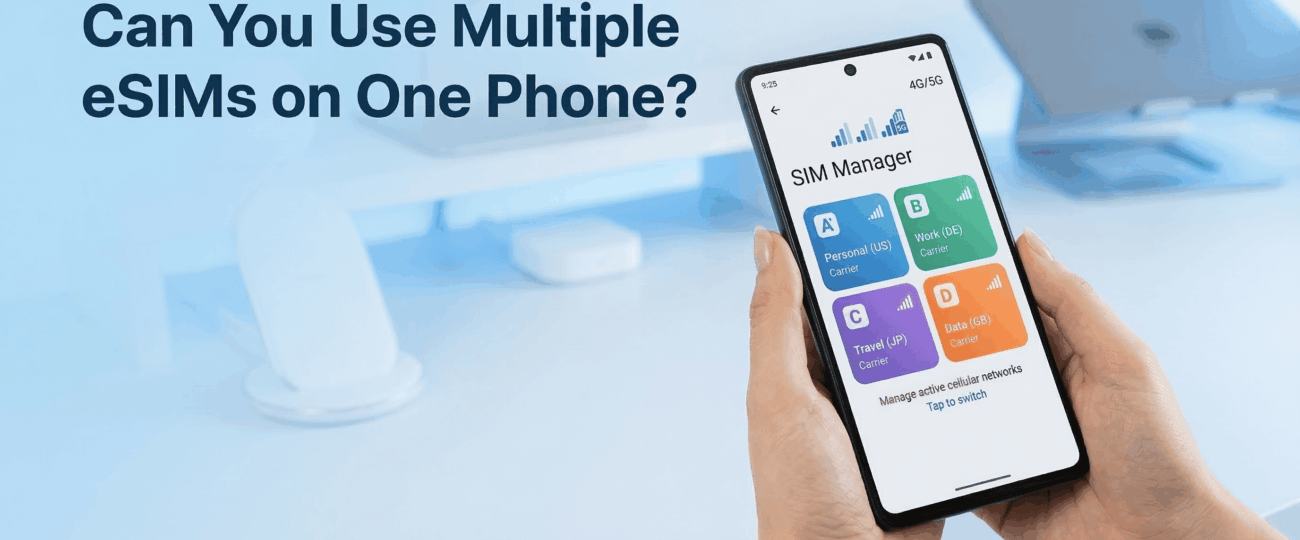
Digital connectivity now allows several carrier profiles inside one device. Phone owners switch networks, add travel plans, or manage work lines in a simple way. Many new devices already support advanced SIM features such as multiple eSIMs and smart profile control. In this blog, you learn how several eSIM profiles work on one phone and how they support daily mobile use.
Many smartphone users ask about dual esim meaning when they explore modern connectivity features. A dual eSIM device allows two digital SIM profiles inside one phone. Each profile links to a different mobile network or plan. You gain the ability to switch lines without a physical SIM card.
Phone settings allow activation of one or two profiles based on device support. Apple devices, especially models with iPhone Multi-ESIM, support more than one stored profile. You choose which line stays active for calls, data, or messages. Travel or work scenarios become far easier with this flexibility.
Many users also search the web with questions such as what does dual esim mean or how it works in daily life. A clear idea helps users select the right phone and mobile plan. Network providers also support profile activation through QR codes, and users can also browse available eSIM data plans in the eSIM shop before activating a new profile.
Phone owners often ask can i have two esims at once when they plan travel or manage business calls. Many new smartphones support two active profiles or at least several stored profiles. Device capability decides how many lines stay active at one time. A quick look at device specifications gives the answer.
A phone with dual esim support allows two profiles for calls or data. One profile can serve work communication, and another can serve personal use. Travel users often add a local data plan without removing their home network. Digital SIM technology removes the old need for physical card swaps.
Smartphone brands such as Apple or Google also allow profile storage beyond two lines. Users store several plans and activate one or two when needed. Flexibility increases as mobile networks expand eSIM support worldwide. Device settings allow easy profile selection within seconds.
Digital SIM technology stores mobile plans inside the phone system. Each profile represents a carrier plan with network access and phone number details. You add or remove profiles through a QR code or carrier app. Device settings display every stored profile for quick selection.
Clear knowledge about how esim profiles work multi profile esim helps phone owners manage several plans easily. Modern devices store multiple network identities without a plastic card. Subsections below explain the main aspects of profile use.
Smartphones contain a secure chip for digital SIM data. Network profiles remain inside device memory after activation. You add several plans and switch among them when required. Carrier apps or QR codes complete activation within minutes.
Profile storage helps users avoid physical SIM slots and card swaps. Travelers benefit the most since they add local data plans quickly. Network change becomes simple through device settings. Secure storage also protects profile data from loss.
Phone settings show every stored network profile in one place. You select a preferred line for calls or mobile data. Network change occurs without card removal or device restart in many models. Daily communication becomes smooth through this quick switch.
Work and personal numbers stay separate through digital profiles. A user selects a business line during office hours and another line later. Mobile carriers also allow easy profile removal when a plan ends. Control remains fully in user hands.
Many users explore options such as esim same number on two phones or two numbers on one device. Digital profiles usually support different numbers inside one phone. Each profile connects to a unique carrier account. Separate identity helps business and personal contact control.
Phone settings allow call or message selection per line. Contact groups also align with each number when required. Mobile apps detect active line for calls or messages. Clear separation improves communication control.
Device compatibility decides how many profiles a phone stores. Premium devices support large profile storage with one or two active networks. Apple models often support iphone multi esim capability. Users store travel plans, business numbers, and personal lines in one device.
Carrier support also plays an important role in profile activation. Network providers must allow eSIM service for the device region. Global carriers now support digital SIM technology at a fast rate. Device and network together unlock full eSIM potential.
Mobile users gain strong flexibility through multiple esims inside a single phone. One device manages work calls, travel data, and personal communication. Digital network control reduces the need for extra phones. Users enjoy simple connectivity management in daily life.
Travelers benefit when a local carrier profile joins an existing home network. Data cost drops because local plans replace roaming charges. Network switch occurs through phone settings within seconds. Travel communication stays active without disruption.
Business professionals also gain a major advantage through digital profiles. Work and personal contact remain separate yet accessible in one device. Companies often assign a work profile to employee phones. Personal plans remain private and independent.
Modern smartphones offer powerful digital connectivity through dual esim technology. Phone owners store and activate several mobile plans without physical SIM cards. Travel users, professionals, and everyday smartphone owners benefit from flexible network access. Mobile communication becomes far more efficient through digital profiles.
Clear knowledge about dual esim meaning helps users choose phones with the right connectivity features. Smart profile storage allows easy network switch when travel, work, or cost control requires it. Digital SIM technology also simplifies device design because no physical card slot becomes necessary.
Future mobile devices will expand support for multiple esims as global carriers adopt the technology. Users gain greater freedom with several networks in one device. Digital SIM systems already shape the future of mobile connectivity. Phones now serve as complete communication hubs through advanced eSIM capability.
Many modern smartphones allow storage of several profiles even if only one or two stay active. Device memory stores digital SIM data securely. Users activate another profile through phone settings when required. Travel users often store multiple regional plans.
Yes, a dual profile device allows two numbers on one phone. Each eSIM profile connects to a different carrier account. Calls, messages, and data routes through the selected line. Device settings allow quick selection of the active number.
Questions about esim same number on two phones appear often among users. Most carriers link one number to one active device profile. Network rules usually prevent duplicate activation on two phones at the same time. Carrier support teams provide exact details for each plan.
Support depends on the phone model and manufacturer. Many premium phones support iphone multi esim or similar features in Android devices. Entry level devices may support only one digital profile. Device specifications reveal the exact capability.
Carrier support grows rapidly across many countries. Global networks now activate digital SIM plans through QR codes or mobile apps. Availability still varies by region and provider. Users often check carrier websites for the latest eSIM support details.
 North eSIM
Price range: 1.78 € through 56.45 €
North eSIM
Price range: 1.78 € through 56.45 €
 eSim Bahrain
Price range: 1.75 € through 55.43 €
eSim Bahrain
Price range: 1.75 € through 55.43 €
 eSim Bahamas
Price range: 5.80 € through 183.93 €
eSim Bahamas
Price range: 5.80 € through 183.93 €
 eSim Azerbaijan
Price range: 1.75 € through 60.28 €
eSim Azerbaijan
Price range: 1.75 € through 60.28 €
 eSim Australia
Price range: 1.25 € through 65.98 €
eSim Australia
Price range: 1.25 € through 65.98 €
© 2026 Esimple. All rights reserved by Cubixsol
