


 Written by admin
Mobile users rely on SIM technology because it connects a phone to a cellular network. A traditional card has served this role for many years, yet a digital option now enters the market. Many users now compare physical sim vs esim before they select a mobile plan. Curiosity grows as telecom companies promote modern connectivity through embedded solutions offered by providers like eSimple. In this blog, you will explore difference between sim and esim, benefits, and practical use cases.
Smartphones evolve every year, so network technology also moves ahead. A removable SIM card still works well, yet a built-in chip offers another route. Many people now ask is esim better than physical sim when they upgrade a phone. Network providers also expand support for digital activation across many devices. In this blog, you will learn key insights about esim vs physical sim pros and cons, along with guidance for smart mobile choices.
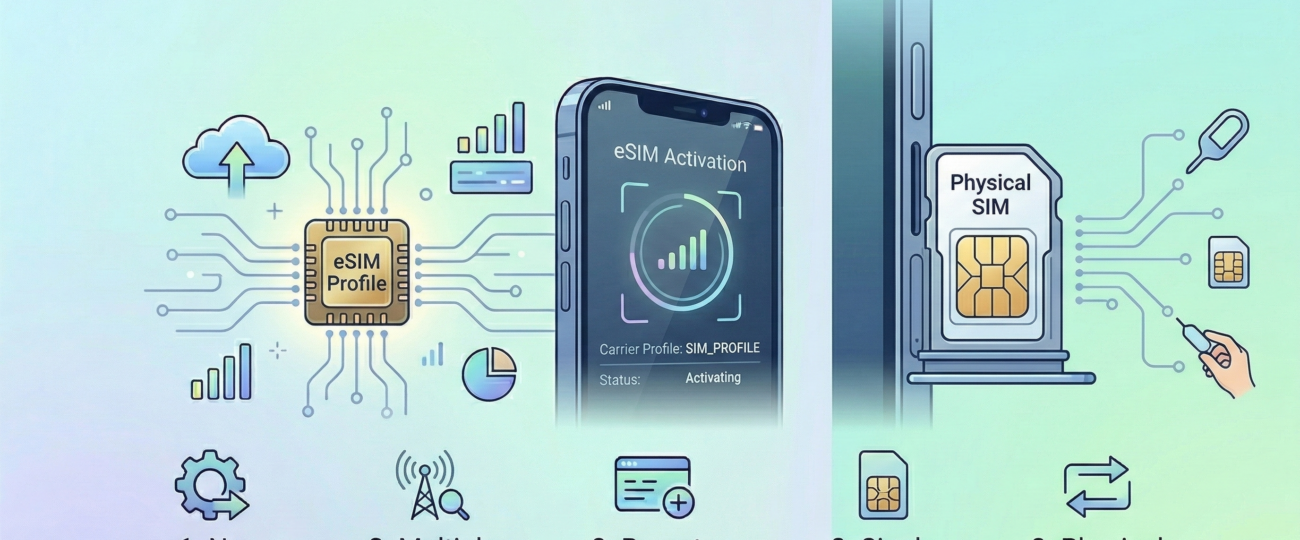
A physical SIM card acts as a small removable chip inside a phone. Network providers issue this card so a user can access calls, texts, and mobile data. A device reads information stored on the chip to connect with the telecom network. Many people compare difference between sim and esim since both options perform the same basic role. Core variation appears in the form and activation process.
An eSIM exists as a tiny chip built directly inside a smartphone or tablet. Users activate a mobile plan through a QR code or digital profile rather than a plastic card. Telecom companies store network credentials on the device through remote configuration. Modern phones from major brands support this digital system. Technology progress drives the shift from physical sim vs esim in many new devices.
Device flexibility also changes due to this technology. A traditional SIM card requires manual insertion and removal when users switch networks. A digital SIM profile allows remote activation through a mobile app or QR code. Travelers often prefer the digital option since they can add a new plan without a physical card. Interest rises in is esim better than physical sim due to such convenience.
An eSIM works through a programmable chip installed inside the phone during manufacturing. Telecom providers send a digital profile to the device through a secure network. Users scan a QR code or open a mobile carrier app to activate the profile. A device then stores network credentials within the embedded chip. Such digital setup supports easy switching between multiple networks.
A single device can store several carrier profiles at the same time. Users choose one active plan inside the device settings whenever required. International travelers benefit from quick activation of a new data plan without physical replacement. Digital SIM management also reduces dependence on retail stores. Such flexibility explains why many users explore physical sim vs esim before they buy a phone.
Security also improves through embedded technology. A built in chip remains fixed inside the device which reduces risk of theft or misuse. Remote carrier control allows quick deactivation when a device gets lost. Network providers also update credentials through secure communication channels. Strong security features influence discussions around esim vs physical sim pros and cons.
Smartphone users evaluate new technology before they adopt it. A digital SIM offers modern convenience, yet a traditional SIM still provides reliability. Consumers often search is esim better than physical sim before they select a device or mobile plan. Clear comparison helps users decide which option suits personal or travel needs. Major factors include flexibility, compatibility, security, and convenience.
Digital activation removes the need for a plastic SIM card. A user scans a QR code from the network provider to activate the mobile plan. Setup often completes in minutes without store visits or card insertion. Telecom companies deliver instant service through remote configuration.
Convenience also benefits travelers who need temporary data plans abroad. A traveler can purchase a plan online and activate it instantly on arrival. No need exists to locate a physical SIM store in a new country. Digital access improves user freedom and mobility.
Manufacturers design thinner devices when they remove the SIM card slot. An embedded chip uses very little internal space inside the phone. Extra room allows larger batteries or improved hardware components. Device makers often prefer eSIM due to such design advantages.
Compact internal layout also supports stronger water resistance. Fewer physical openings reduce risk of dust or moisture entry. Modern flagship phones adopt eSIM technology due to such benefits. Hardware innovation influences debate around physical sim vs esim.
A digital SIM profile allows several mobile plans within one device. Users switch between work and personal numbers through device settings. Dual network access helps professionals manage communication easily. Business travelers also benefit from multiple regional plans.
Network switching also supports cost savings during travel. A traveler can activate a local data profile for lower charges. No physical replacement becomes necessary during network change. Flexibility drives interest in difference between sim and esim among frequent travelers.
A physical SIM card still works on almost every phone worldwide. Many rural areas rely on older devices which support only removable cards. Easy card swapping also helps users move a number between devices quickly. Physical access remains valuable in such scenarios.
Retail stores also distribute SIM cards quickly for new users. Activation may occur within minutes at a service desk. Some users prefer tangible hardware due to familiarity. Traditional access continues to shape the discussion around esim vs physical sim pros and cons.
User lifestyle often determines which option works best. Digital SIM technology suits travelers and tech-focused users who prefer remote activation. Fast profile switching also helps people who maintain multiple networks. Many users also explore available eSIM data plans and options before deciding which solution fits their travel or daily connectivity needs. Convenience and flexibility attract many smartphone users toward eSIM.
A physical SIM card still offers universal compatibility. Older devices and many budget phones support only the removable card format. Rural telecom infrastructure in some regions also depends on traditional SIM activation. Reliability and familiarity still appeal to a large user base.
Device ecosystem also influences the final choice. Premium smartphones now adopt embedded SIM support across many models. Budget devices continue to support removable cards due to cost and compatibility reasons. A balanced comparison of physical sim vs esim helps users decide which option fits daily needs.
elecommunication technology continues to evolve as mobile devices grow smarter. A removable SIM card served users well across many decades of mobile connectivity. A digital SIM now offers modern convenience through remote activation and flexible network access. Many users explore difference between sim and esim as device technology moves ahead.
Device manufacturers and telecom companies also support embedded connectivity in many new models. Digital activation offers fast setup, remote control, and improved security. Users who want practical guidance can also follow How to Install an eSIM on iPhone (Step by Step Guide) to understand the activation process on modern devices. Traditional SIM cards still remain useful due to wide compatibility and ease of replacement. Balanced knowledge of esim vs physical sim pros and cons helps users choose wisely.
Consumer needs vary across travel habits, device type, and network support. Some users value simplicity and universal compatibility of traditional SIM cards. Others prefer digital convenience and multi network flexibility through eSIM technology. Clear awareness of physical sim vs esim allows confident mobile choices in the modern telecom world.
A physical SIM card exists as a removable chip placed inside a phone. An eSIM works as a built in chip embedded within the device hardware. Network providers activate the eSIM through a digital profile instead of a plastic card. Core difference between sim and esim lies in the activation process and physical design.
Many travelers prefer eSIM because it allows quick network activation abroad. A traveler can purchase a data plan online and scan a QR code for instant connectivity. No physical card swap becomes necessary during international trips. Such convenience often answers the question is esim better than physical sim for travel scenarios.
Many modern smartphones now support dual connectivity options. A device may include one physical SIM slot along with an embedded SIM chip. Users can activate one or both networks depending on device capability. Such flexibility helps people compare physical sim vs esim within the same phone.
A built in chip reduces risk of removal or misuse if a phone gets stolen. Network providers can also disable an eSIM profile remotely through account access. Secure digital configuration adds another protection layer for mobile users. Security improvements often appear in discussions around esim vs physical sim pros and cons.
Not every smartphone includes embedded SIM support yet. Premium devices from major brands often include eSIM capability. Budget or older phones usually support only removable SIM cards. Device specifications help determine availability when users compare difference between sim and esim.
 North eSIM
Price range: 1.78 € through 56.45 €
North eSIM
Price range: 1.78 € through 56.45 €
 eSim Bahrain
Price range: 1.75 € through 55.43 €
eSim Bahrain
Price range: 1.75 € through 55.43 €
 eSim Bahamas
Price range: 5.80 € through 183.93 €
eSim Bahamas
Price range: 5.80 € through 183.93 €
 eSim Azerbaijan
Price range: 1.75 € through 60.28 €
eSim Azerbaijan
Price range: 1.75 € through 60.28 €
 eSim Australia
Price range: 1.25 € through 65.98 €
eSim Australia
Price range: 1.25 € through 65.98 €
© 2026 Esimple. All rights reserved by Cubixsol
